Description
01. Product Overview
BURKERT Level Measurement Systems are designed to monitor and detect the filling levels of liquids, bulk materials and other process media in industrial equipment.
The product portfolio covers five measurement technologies: radar, guided radar, ultrasonic, vibrating tuning fork and float measurement.
These technologies support both continuous level measurement and limit level detection in process tanks, storage vessels, pipelines, silos and open channels.
Continuous measurement provides ongoing level information for process monitoring and automated control, while level switches detect predefined minimum or maximum levels and generate switching signals for connected equipment.
The product range is suitable for applications in chemical processing, pharmaceutical production, food and beverage manufacturing, water treatment and industrial storage systems.
02. Product Features
- Continuous and point-level measurement solutions
- Non-contact radar level measurement
- Guided radar measurement using rod or cable probes
- Ultrasonic level measurement
- Vibrating tuning fork level switches
- Float-operated level switches
- Measurement of liquids and selected bulk materials
- Minimum and maximum level detection
- Overflow and dry-run protection applications
- Compact sensor designs for industrial installations
- Stainless steel sensor construction on selected models
- Different process connection configurations
- Electrical switching and communication options
- Solutions for demanding industrial and hygienic environments
Measurement range, accuracy, process pressure, temperature limits, media compatibility and electrical specifications depend on the selected technology and model.
03. Available Product Series
1. Radar Level Measurement
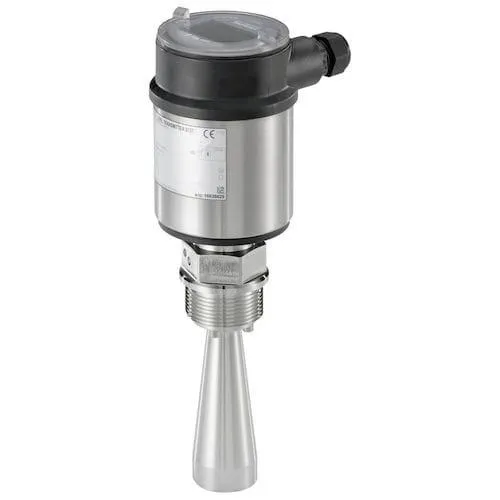
Radar level sensors use electromagnetic radar pulses to determine the distance between the sensor and the surface of the medium.
The fill level is calculated from the time taken for the reflected signal to return.
Key characteristics include:
- Non-contact measurement
- Suitable for liquids and selected bulk materials
- Accurate measurement under changing process conditions
- Applications involving aggressive media
- Reduced sensitivity to steam, dust and pressure changes compared with ultrasonic measurement
Radar technology is suitable for process tanks, storage vessels, chemical installations and industrial silos.
2. Guided Radar Level Measurement
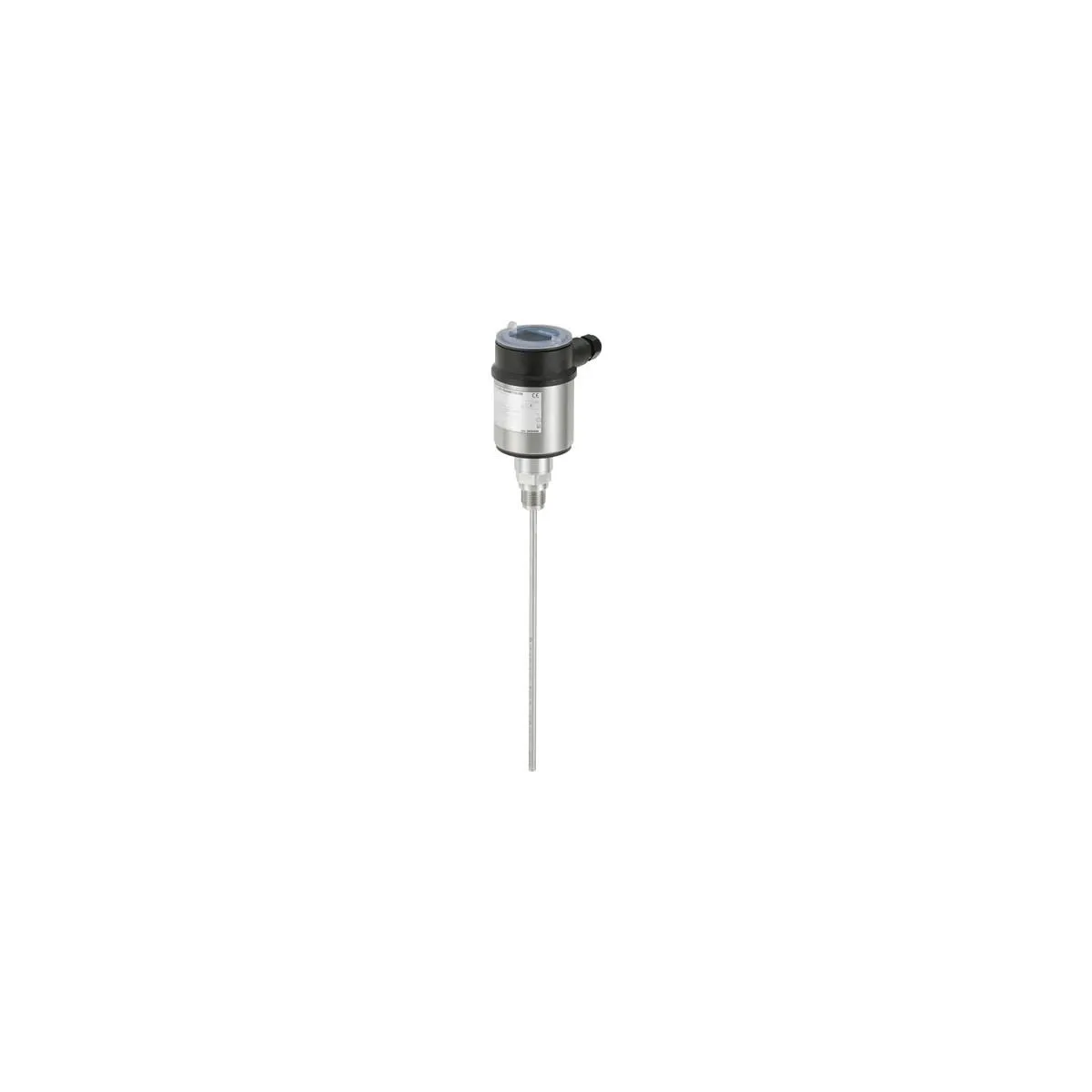
Guided radar sensors transmit electromagnetic pulses along a fixed probe, such as a rod or cable.
The reflected signal is used to determine the medium level.
Key characteristics include:
- Stable measurement using a guided probe
- Suitable for selected applications involving foam
- Measurement in vessels with limited installation space
- Applications involving different media layers
- Continuous level monitoring
The probe configuration must be selected according to the vessel geometry, medium and installation conditions.
3. Ultrasonic Level Measurement
Ultrasonic level sensors use sound waves to measure the distance between the sensor and the medium surface.
The measurement is performed without direct contact with the liquid.
Typical applications include:
- Water storage tanks
- Wastewater treatment facilities
- Open channels
- Industrial liquid storage
- General-purpose tank level monitoring
Measurement performance can be affected by temperature fluctuations, dust, steam, condensation and other environmental conditions.
4. Tuning Fork Level Switches – Type 8110
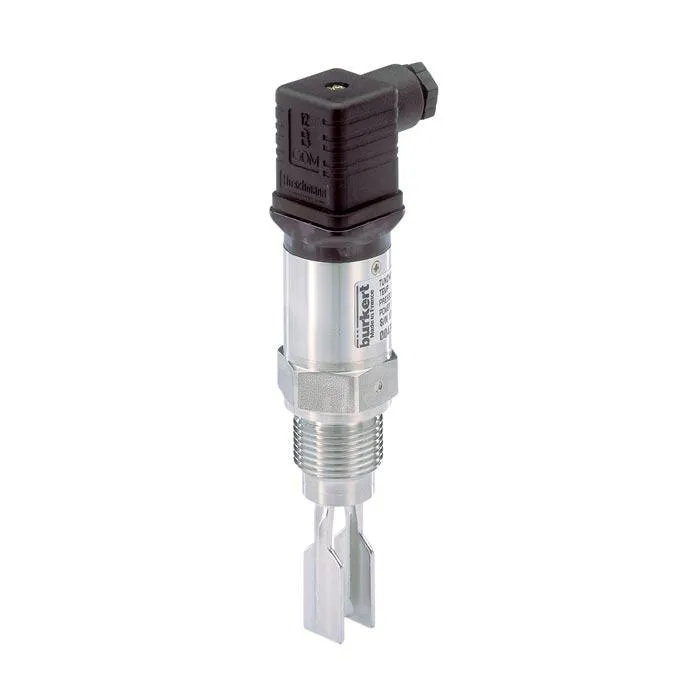
The BURKERT Type 8110 is a vibrating tuning fork level switch designed for limit level detection in liquids.
The sensor uses a vibrating fork as its sensing element. When the fork comes into contact with the liquid, its vibration changes and generates a switching signal.
Key characteristics include:
- Reliable minimum and maximum level detection
- Compact stainless steel sensor design
- Suitable for tanks, vessels and pipelines
- Resistance to turbulence and external vibration
- Applications involving foaming and air bubbles
- IO-Link and switching output configurations, depending on the version
- Suitable for overflow and dry-run protection
5. Float Level Switches
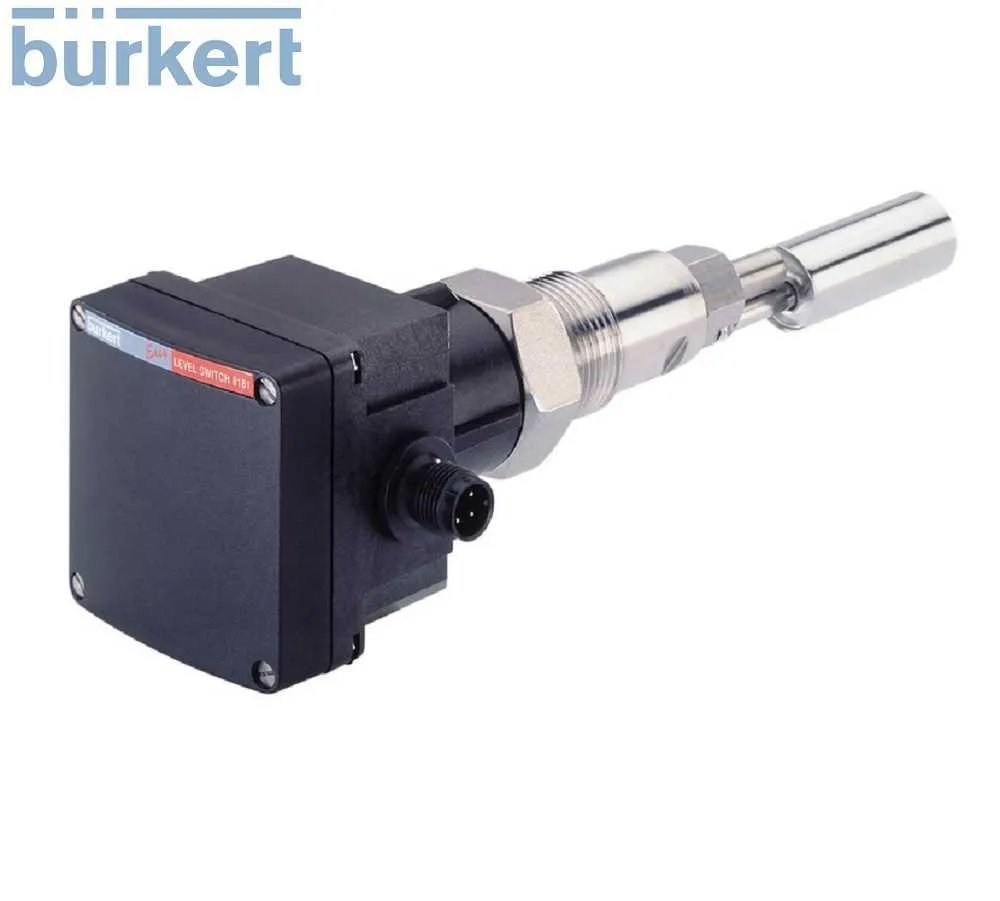
Float level sensors use a floating element containing a magnet to detect predefined liquid levels.
When the liquid reaches the switching point, the magnet activates an internal switching mechanism.
Typical applications include:
- Water storage tanks
- Wastewater systems
- Chemical liquid containers
- Industrial cooling systems
- Fuel and liquid storage equipment
- Minimum and maximum liquid level monitoring
Float technology provides a straightforward solution for applications requiring simple liquid level switching.
04. Available Models
The following BURKERT product references are relevant to the level measurement portfolio.
Tuning Fork Level Measurement
- Type 8110 – Vibrating Level Switch
Radar Level Measurement
- Type 8137 – Radar Level Meter
Guided Radar Level Measurement
- Type 8189 – Guided Microwave Level Meter
Additional Measurement Technologies
- Industrial Radar Level Sensors
- Guided Radar Level Sensors
- Ultrasonic Level Sensors
- Vibrating Tuning Fork Level Switches
- Float Level Switches
- Continuous Level Measurement Devices
- Minimum and Maximum Level Detection Devices
- Tank Level Monitoring Components
- Level Measurement Accessories
Type 8137 and Type 8189 appear in BURKERT’s earlier official product documentation. Their current production and ordering status should be confirmed before treating them as available replacement products.
Additional level measurement products may be available in different connection types, probe lengths, housing materials, switching outputs and electrical configurations.
For accurate product identification, please provide the complete BURKERT type number and article number where available.
05. Industrial Applications
BURKERT Level Measurement Systems are commonly used in:
- Water treatment and wastewater facilities
- Drinking water storage systems
- Chemical processing plants
- Pharmaceutical manufacturing
- Biotechnology production
- Food and beverage processing
- Industrial storage tanks
- Bulk material silos
- Powder and granule handling systems
- Industrial cooling and heating systems
- Fuel and oil storage
- Pump protection systems
- Overflow prevention systems
- Industrial process automation
- Environmental monitoring equipment
06. More Models & Technical Specifications
The BURKERT level measurement portfolio includes additional radar sensors, guided radar devices, ultrasonic level sensors, vibrating level switches, float switches and related installation accessories.
Different technologies are available for continuous level monitoring and predefined limit detection.
When selecting a suitable level sensor, the following parameters should be considered:
- Medium type and physical properties
- Liquid or bulk material application
- Continuous measurement or point-level detection
- Required measurement range
- Vessel height and installation arrangement
- Process pressure and temperature
- Foam, turbulence and condensation conditions
- Process connection and probe configuration
- Required electrical output and communication interface
- Material compatibility and hygiene requirements
For other BURKERT level measurement series, additional models or specific part numbers, please contact our online customer service team for further assistance.